When comparing epoxy vs polyaspartic garage floor coatings, most homeowners want to know which system fits their budget and lasts longer. Most homeowners start shopping for a garage floor coating with one question: epoxy or polyaspartic? Both turn bare, dusty concrete into a finished floor. But they are different materials, they are installed differently, and they age differently. The difference is much larger in a garage that bakes through a Louisiana summer than in one in Ohio.
Concrete Coatings Inc. has coated floors, patios and pool decks across Louisiana, South Mississippi and South Alabama for 37 years. We are the only authorized Sundek installer in the region. This guide explains how the two coating types compare over the full life of the floor, not just on installation day, so you can choose the right system the first time.
Quick Answer: Is Polyaspartic Better Than Epoxy?
For most Gulf Coast garages, yes. A professionally installed polyaspartic coating cures in hours instead of days. It resists yellowing under sunlight and holds up better to hot tires and the heat swings that soften standard epoxy. Epoxy still has a place: it costs less up front and works well as a thick base layer or on interior floors that never see sun. In a garage that gets daily vehicle traffic, an open door and South Louisiana humidity, polyaspartic usually lasts longer between recoats and needs less upkeep.
The bigger factor is often not the coating at all but the installation. A premium coating over a poorly prepared slab will fail. A properly prepared slab gives either coating its best chance.
What Epoxy and Polyaspartic Actually Are
Epoxy is a two-part resin that hardens through a slow chemical reaction. That slow reaction is its strength and its weakness. It gives installers a long working time and lets epoxy build a thick layer that fills minor surface flaws. But it also means long cure times, and most epoxies are not UV-stable, so they can amber or chalk when sunlight reaches the floor.
Polyaspartic is an aliphatic polyurea, a newer coating chemistry built to cure fast and stay color-stable in sunlight. It reaches a hard, usable finish in a fraction of the time epoxy needs. Performance under temperature changes depends on the formulation and the complete installed system. Its short working time makes experienced installation especially important.
Not Two Options, but Three
Most “epoxy vs. polyaspartic” comparisons skip an important point. “Epoxy” covers two very different products, and that difference explains most of the gap between quotes.
| DIY epoxy kit | Professional epoxy system | Professional polyaspartic system (e.g., SunOne Polyaspartic) | |
| What it is | Thin, often water-based epoxy rolled on by the homeowner | Higher-solids epoxy over a mechanically prepared slab, usually with a topcoat | Fast-cure polyaspartic system over a ground slab, with optional decorative flake and clear topcoat |
| Surface prep | Acid etch or cleaner | Diamond grinding | Diamond grinding plus crack and joint repair |
| Typical working life* | Often 1–3 years before peeling in a working garage | Several years, longer with a UV-stable topcoat | 10–15+ years with normal use and care |
| UV / sun exposure | Prone to yellowing | Prone to yellowing unless topcoated | UV-stable |
| Hot-tire pickup | Common | Possible in summer heat | Resists hot-tire pickup |
| Back in use | Several days | Foot traffic about a day; vehicles in several days | Foot traffic in hours; vehicles typically the next day |
| Up-front cost | Lowest | Mid-range | Highest per sq ft |
*Working life depends on slab condition, prep quality, traffic and care. Polyaspartic figure reflects CCI’s published range for professionally installed garage coatings.
A DIY kit and a professional polyaspartic system are not two versions of the same thing. They are different products built to last for different lengths of time. Comparing their prices directly is like comparing a coat of paint with a roof.
Why Garage Coatings Fail on the Gulf Coast
Most failed garage floors in South Louisiana, Mississippi and Alabama fail for the same three reasons. None of them is fixed by choosing the more expensive coating alone.
1. Moisture coming up through the slab
Gulf Coast slabs sit on damp soil under some of the highest humidity in the country. Water vapor moves up through the concrete constantly. If a coating goes down over a slab that is not tested and prepared for that vapor, pressure builds underneath and the coating blisters or lets go. This is the most common reason a “bargain” epoxy floor starts peeling within its first year or two.
2. Shallow prep
Surface preparation must achieve the profile required by the coating manufacturer. Diamond grinding can remove weak surface material and old coatings; oil contamination may need additional treatment. SUNDEK permits mechanical grinding or chemical etching for some SunOne applications. Repair cracks with a compatible crack-repair product, and treat moving joints separately so they can continue to move.
3. Heat and sunlight
A garage door that faces west, a hot vehicle parked after a long drive, and summer temperatures inside a closed garage all stress a coating. Standard epoxy softens under that heat, which is how hot tires lift it off the floor. Sunlight through an open door causes the yellowing many homeowners notice after a few summers. Polyaspartic chemistry is designed for both stresses.
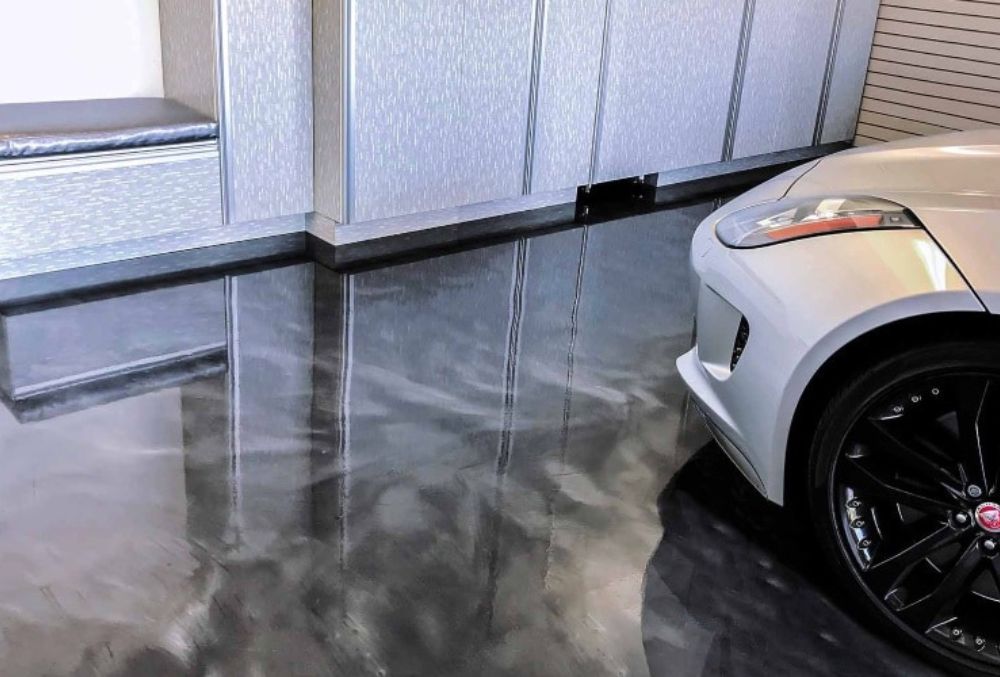
Epoxy vs Polyaspartic Garage Floor Cost Over Time
On the day of installation, epoxy usually wins on price. Over ten years the math often reverses.
A DIY kit costs a few hundred dollars but commonly needs stripping and redoing within a few years. Each redo means grinding off failed coating before anything new can go down. A professional epoxy floor lasts longer, but in a sunny, hot garage it may need a new topcoat or repairs sooner than expected. A professionally installed polyaspartic floor costs more up front. It is built to go much longer before it needs anything more than routine cleaning.
Ask for an itemized quote based on your garage size, slab condition and specified coating system. The best way to compare quotes is to ask each contractor how many years the floor should last before it needs work, and what that work will cost. A higher price that covers the next 15 years is often the better value than a lower price that covers three.
Which Coating Fits Your Garage?
| Your garage | Better fit | Why |
| Daily-driver garage, door open often | Polyaspartic | Hot tires and sunlight are the two biggest epoxy failure points |
| Workshop or hobby garage with oil, fuel, tools | Polyaspartic with flake | Chemical and stain resistance plus a textured, forgiving surface |
| Home gym or finished garage with no sun exposure | Either, installed professionally | UV is not a factor; prep quality decides lifespan |
| Garage that has to be back in use quickly | Polyaspartic | Foot traffic in hours instead of days |
| Coastal property near salt air | Polyaspartic over properly prepped concrete | Seals the surface against salt residue, moisture and UV |
| Commercial bay, showroom or shop | Polyaspartic | Fast return to service limits downtime; see our commercial floor coatings |
Why Polyaspartic Needs a Professional Installer
Polyaspartic’s fast cure is a benefit once it is on the floor. It is a challenge while it is being applied. Once mixed, the material has a short working time, often a matter of minutes, and it must be spread evenly and broadcast with flake before it starts to set. An experienced crew mixes in small batches, works in sections and keeps a wet edge so the floor has no lap marks. DIY polyaspartic products exist, but fast application and moisture control make experienced installation valuable.
Concrete Coatings Inc. installs SunOne Polyaspartic, Sundek’s fast-cure floor system, as the only authorized Sundek installer in Louisiana, South Mississippi and South Alabama. For a product-level look at how SunOne compares, read SunOne Polyaspartic vs. epoxy.
See the SunOne Polyaspartic vs. epoxy comparison for product-specific details.
Questions to Ask Before You Sign a Garage Floor Quote
Whichever coating you choose, these questions will tell you a lot about the floor you are actually buying:
1. How will you prepare the slab: diamond grinding or acid etching?
2. Will you test the concrete for moisture before coating?
3. How will cracks and control joints be repaired?
4. Is the coating UV-stable, or will it need a separate topcoat?
5. When can I walk on the floor, and when can I park on it?
6. How many years should the floor last before it needs work, and what does the warranty cover?
A contractor who answers these clearly and in writing is selling you a floor system, not just a coating.
Frequently Asked Questions
Is polyaspartic better than epoxy for a garage floor?
For most Gulf Coast garages, yes. Polyaspartic cures in hours, stays UV-stable and resists hot-tire pickup, which are the main ways epoxy fails in Louisiana, Mississippi and Alabama heat. Epoxy costs less up front and works well on interior floors with no sun exposure, but polyaspartic usually lasts longer between recoats in a working garage.
How long does epoxy last compared with polyaspartic?
A DIY epoxy kit often lasts only a few years in a working garage before peeling. A professional epoxy system lasts longer, especially with a UV-stable topcoat. A professionally installed polyaspartic garage floor can last 10 to 15 years or more with normal use and care. In every case, surface preparation has a large effect on lifespan.
Why do epoxy garage floors peel in Louisiana?
Most peeling comes from moisture vapor rising through the slab, shallow surface prep such as acid etching instead of diamond grinding, and hot tires softening the coating in summer heat. Proper moisture testing, mechanical grinding and a heat-resistant coating address all three.
Can I install a polyaspartic garage floor coating myself?
Professional installation is recommended. Many polyaspartic formulations have short working times, so preparation, mixing and application must follow the product instructions. DIY products exist, but application errors can compromise the finish.
Is a polyaspartic garage floor slippery when wet?
A smooth, high-gloss finish of any coating can be slick when wet. Broadcasting decorative flake or adding a slip-resistant additive to the topcoat adds texture and traction, which is what most homeowners choose for a garage that sees rain-soaked tires.
Can a garage floor be coated in humid weather?
Yes, when conditions fall within the specified product limits. The installer should check slab moisture, temperature, humidity and dew point, and use moisture mitigation where required. High humidity alone does not establish whether a slab is ready to coat.
Get the Right Garage Floor Coating the First Time
Concrete Coatings Inc. has served the Gulf Coast for 37 years and is the only authorized Sundek installer in Louisiana, South Mississippi and South Alabama. Every project starts with an on-site walkthrough, where we check your slab, moisture conditions and how you use the space before recommending a system. Residential garage floor coatings carry a 2-year warranty, and commercial installations carry a 1-year warranty. Explore our garage floor coatings, or call (985) 542-2757 to schedule your free estimate.