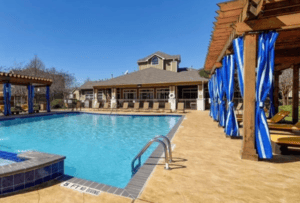
First impressions in business happen fast — and for most Gulf Coast commercial properties, the floor, entryway, or parking area is the first thing a customer, client, or inspector sees. Worn, stained, or cracked concrete doesn’t just look neglected. It communicates something specific about how a business is run.
The good news is that this is a fixable problem — and faster than most business owners expect. commercial resurfacing Louisiana restore deteriorated concrete surfaces to a professional, durable finish without the disruption or cost of full concrete replacement, keeping your business image sharp and your operations moving.
The Visual Problem Business Owners Underestimate
Walk the exterior and interior surfaces of your commercial property the way a first-time visitor would. What you’ve stopped noticing after years of familiarity — the hairline cracks along the entryway, the staining near the loading dock, the gray, weathered look of the parking apron — is exactly what visitors, clients, and health or safety inspectors notice immediately.
In competitive Gulf Coast markets like Baton Rouge, New Orleans, Metairie, Slidell, and the surrounding South Louisiana corridor, commercial properties are compared against each other constantly. A restaurant with a clean, coated floor and a well-maintained entrance presents differently than one with bare, pitted concrete. A retail storefront with a crisp, sealed surface signals investment and care. A healthcare facility, hotel, or office building with deteriorating concrete sends a message that the business doesn’t maintain what it owns.
None of this is fair — a business can be excellent at what it does and have concrete that simply aged. But perception is real, and worn concrete works against you before you’ve had a chance to make your case.
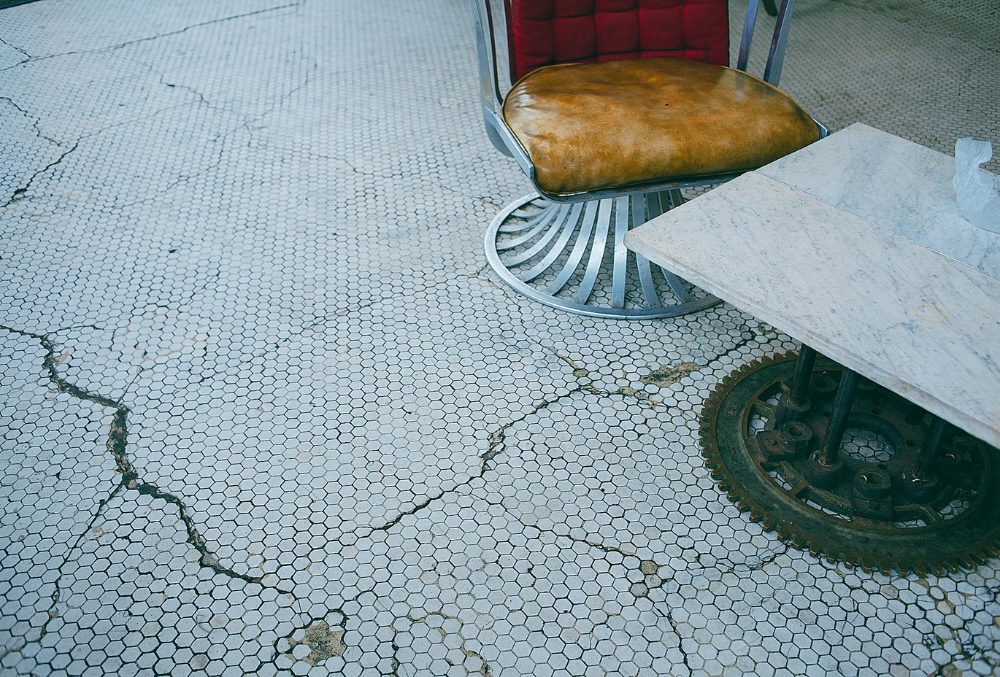
The Specific Ways Concrete Deteriorates on Gulf Coast Commercial Properties
Louisiana’s climate is uniquely hard on commercial concrete. The combination of high humidity, intense heat, heavy rainfall, and proximity to coastal salt air creates a set of conditions that accelerate surface degradation faster than in most other parts of the country.
Surface scaling and spalling. Repeated moisture infiltration and Gulf Coast storm events cause concrete surfaces to flake, chip, and develop a rough, broken texture that collects dirt and is impossible to keep clean.
Staining that won’t wash off. Oil from vehicles, rust from metal fixtures, biological growth from standing water, and chemical exposure from cleaning products all leave marks that penetrate unsealed concrete permanently.
Cracking from thermal expansion. South Louisiana temperatures swing enough — especially between summer highs and the occasional hard freeze — to cause concrete to expand and contract, widening existing micro-cracks into visible, structural defects over time.
Color fading. UV exposure from Louisiana’s intense sun bleaches and grays concrete surfaces, creating a visually tired look even when the surface is otherwise structurally sound.
Each of these issues compounds the others. Cracks collect staining material. Faded surfaces make discoloration more visible. Spalled edges become trip hazards. What starts as a cosmetic issue becomes a safety and liability concern.
How Commercial Resurfacing Restores the Image — Without Replacing the Slab
The critical advantage of professional commercial resurfacing is that it addresses all of these problems without requiring concrete demolition or replacement. A properly applied resurfacing system bonds to the existing slab, fills surface imperfections, creates a uniform finish, and applies a protective coating that resists the specific conditions your property faces.
For Gulf Coast commercial properties, the benefits are immediate and measurable:
Consistent, professional appearance. A freshly resurfaced floor or entryway reads as well-maintained regardless of the age of the underlying concrete.
Improved safety. Slip-resistant textures, smooth transitions between surfaces, and the elimination of trip-hazard edges all reduce liability exposure.
Easier maintenance. A sealed, coated surface is dramatically easier to clean and maintain than bare or deteriorated concrete — reducing ongoing labor costs.Faster turnaround than replacement. Commercial resurfacing is typically completed in a fraction of the time required for slab removal and repour, which matters significantly for businesses that cannot afford extended closures.
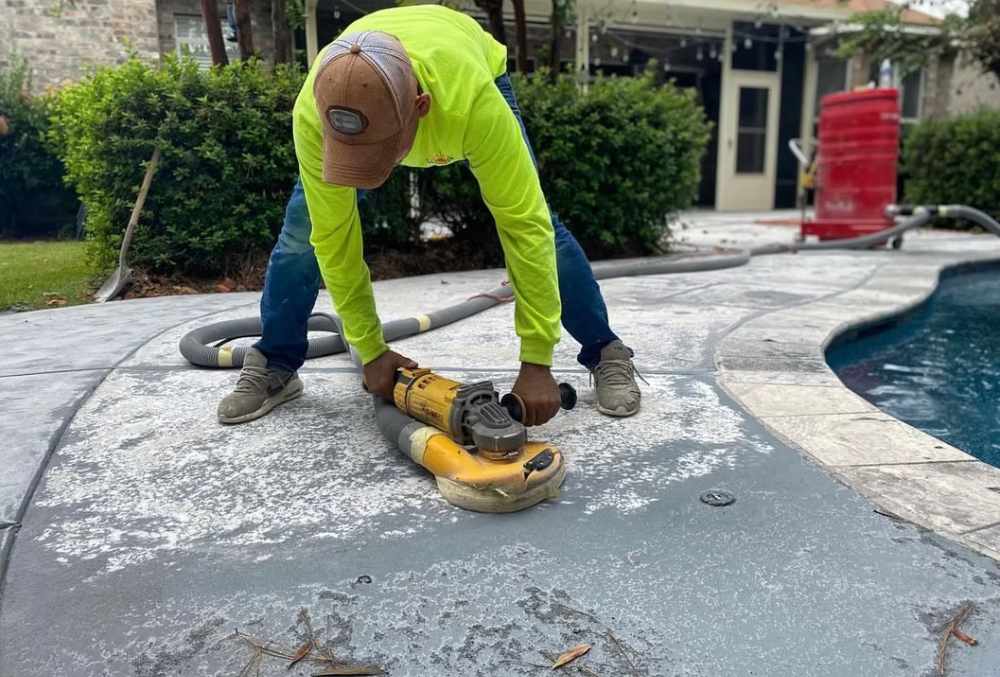
The Long-Term Business Case
A commercial property that looks well-maintained retains customers, attracts new ones, and supports higher-value perceptions of the business operating inside. Commercial resurfacing isn’t a cosmetic luxury — it’s a property maintenance investment with a direct line to business performance.
South Louisiana’s climate means concrete deterioration is a when, not an if. The businesses that maintain their surfaces proactively avoid the compounding cost of neglect, and they never have to face the jarring gap between the quality of their service and the condition of their property. Louisiana’s climate is also a major factor in how quickly surfaces fail without proper protection — a topic explored in depth in our guide to Louisiana humidity damage. Understanding that threat is the first step toward addressing it before it affects your business image.
Ready to Restore Your Commercial Property’s First Impression?
CCI Gulf Coast has served commercial clients across South Louisiana, South Mississippi, and South Alabama for over 30 years. Call (985) 542-2757 or request a free commercial estimate online to schedule a surface assessment and see what professional resurfacing can do for your property.