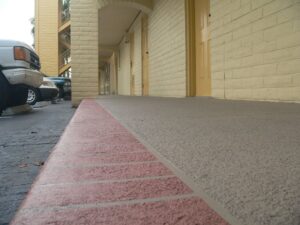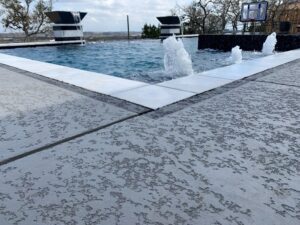
Garage floor coating in New Orleans has to handle three things most coatings are not built for. Moisture rises through slabs that sit over a shallow water table. Humid air makes bare concrete “sweat.” And summer heat softens standard epoxy under hot tires. For most New Orleans homes, the best fit is a professionally installed polyaspartic system, such as SunOne Polyaspartic, applied over a diamond-ground slab and usually finished with decorative flake for traction. You can walk on it within hours and typically park on it the next day. A professionally installed garage coating can last 10 to 15 years or longer with normal use and care.
Concrete Coatings Inc. has coated floors, patios and pool decks across the Gulf Coast for 37 years. We are locally owned and the only authorized Sundek installer in Louisiana, South Mississippi and South Alabama. This guide covers what New Orleans conditions do to a garage floor, which systems hold up, how installation works and what to ask before you book. If you are comparing installers, start with what it means to work with an authorized Sundek installer in New Orleans.
Why New Orleans Is Hard on Garage Floors
A garage floor in New Orleans takes more abuse than the same slab would in a drier, cooler city. Knowing why helps you pick a coating that will last, and spot a quote that skips steps.
Slabs close to the water table
Much of the metro sits on soft, wet soil with groundwater close to the surface. Water vapor moves up through the concrete all year. If a coating goes down without the slab being checked and prepared for that moisture, vapor pressure builds underneath and the coating can blister or peel. Soft soils also let slabs settle over time, which is why so many garages in the city have cracks that need repair before anything is applied.
Humid air and “sweating” slabs
On warm, muggy days after a cool spell, moist air hits a cooler concrete floor and condenses. The slab looks wet and bare concrete gets slick. No coating stops condensation, because that is a matter of air and surface temperature. But a sealed, coated floor does not soak up the water. It wipes dry, and a flake finish gives your shoes and tires more grip while it is damp.
Heat, sun and hot tires
A closed garage in a New Orleans July gets hot, and a car pulled in after a drive across town brings hot tires with it. Standard epoxy softens under that heat, which is how tires lift patches of coating off the floor. Sunlight through an open, west-facing door adds UV exposure, which turns many epoxies yellow within a few summers.
Salt air, grime and chemicals
Homes near Lake Pontchartrain get salt-tinged air, and every garage collects oil, brake fluid, lawn chemicals and road grime. Bare concrete absorbs all of it. A coated floor keeps spills on the surface so they clean up instead of soaking in.
Heavy rain and storm season
When a downpour pushes water and mud under the garage door, a coated floor is far easier to clean afterward than porous concrete. A coating does not make a garage flood-proof. What it gives you is a sealed surface that does not absorb water and dirt, and that dries out and cleans up faster.
Which Garage Floor Coating Works Best in New Orleans?
Most homeowners compare three options: a DIY epoxy kit, a professional epoxy system and a professional polyaspartic system. In New Orleans conditions, polyaspartic is usually the strongest choice for a working garage, and the condition of the slab underneath matters as much as the product on top. Here is how a polyaspartic garage floor handles the problems above:
| New Orleans condition | What it does to an uncoated or poorly coated floor | How a professional SunOne Polyaspartic system handles it |
| Moisture rising through the slab | Blistering and peeling | Slab is checked and diamond-ground before coating, so the system bonds to sound concrete |
| Sweating slabs in humid weather | Slick, damp, stained concrete | Sealed surface wipes dry; flake finish adds traction |
| Summer heat and hot tires | Epoxy softens and lifts | Built to resist hot-tire pickup |
| Sunlight through an open door | Yellowing and chalking | UV-stable, so color holds |
| Oil, fluids, salt air | Stains soak into bare concrete | Spills stay on the surface and clean up |
| Needing the garage back quickly | Days of downtime with epoxy | Foot traffic in hours; vehicles typically the next day |
Epoxy still has a place, especially as a base layer or on interior floors that never see sun. For a side-by-side look at lifespan, cure time and long-term value, read our epoxy vs. polyaspartic buying guide. For product detail on SunOne specifically, see SunOne Polyaspartic vs. epoxy.
Finish Options for New Orleans Garages
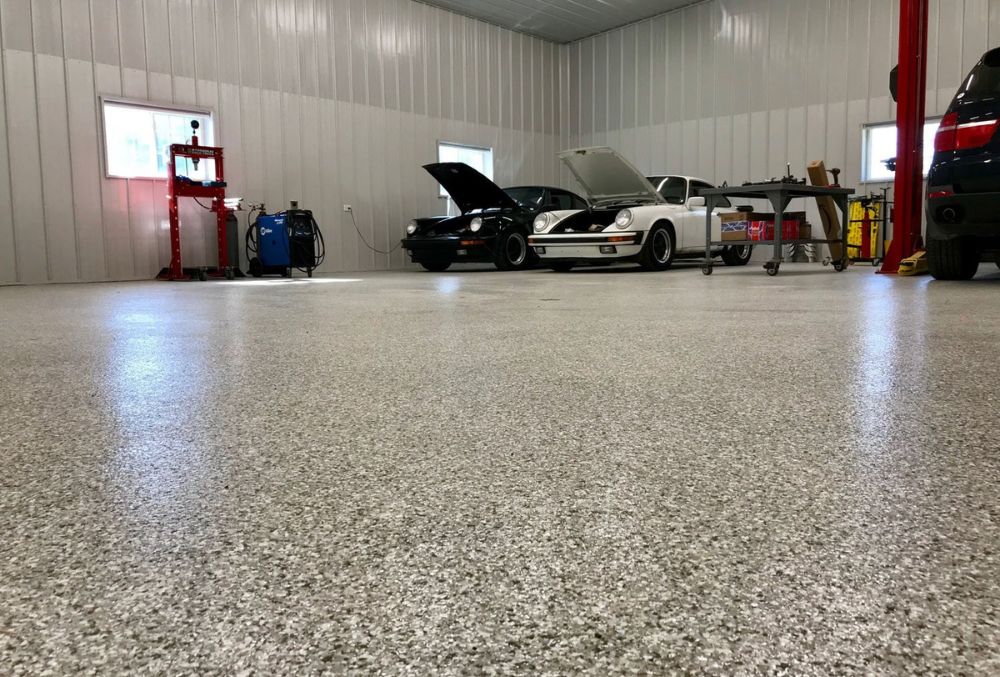
A coated garage floor can look as finished as the rest of the house. Most New Orleans homeowners choose a decorative flake finish, and there are two common styles:
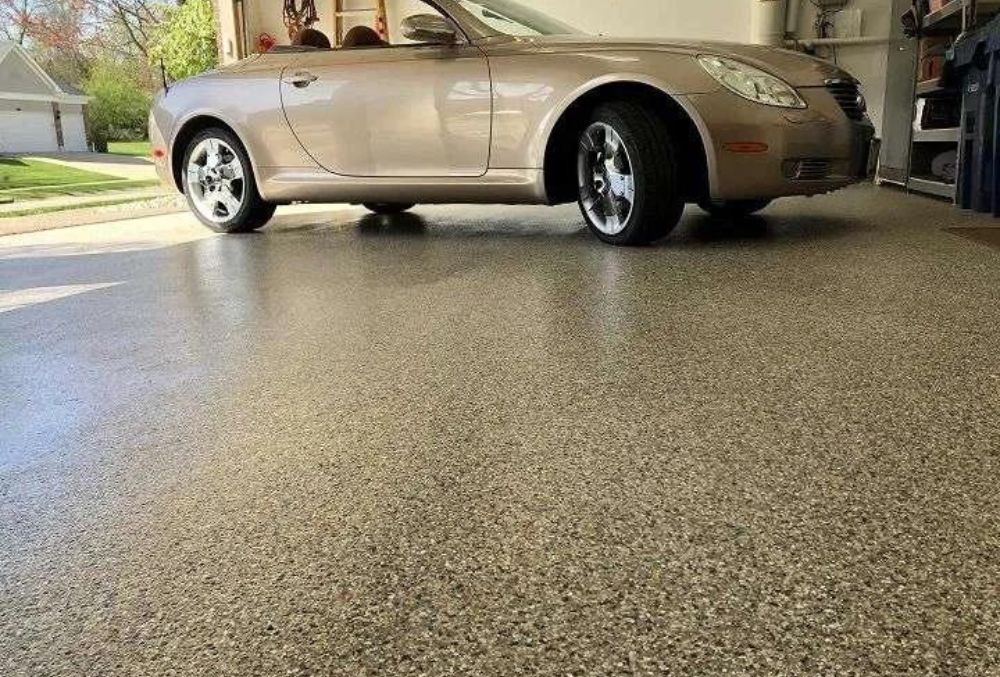
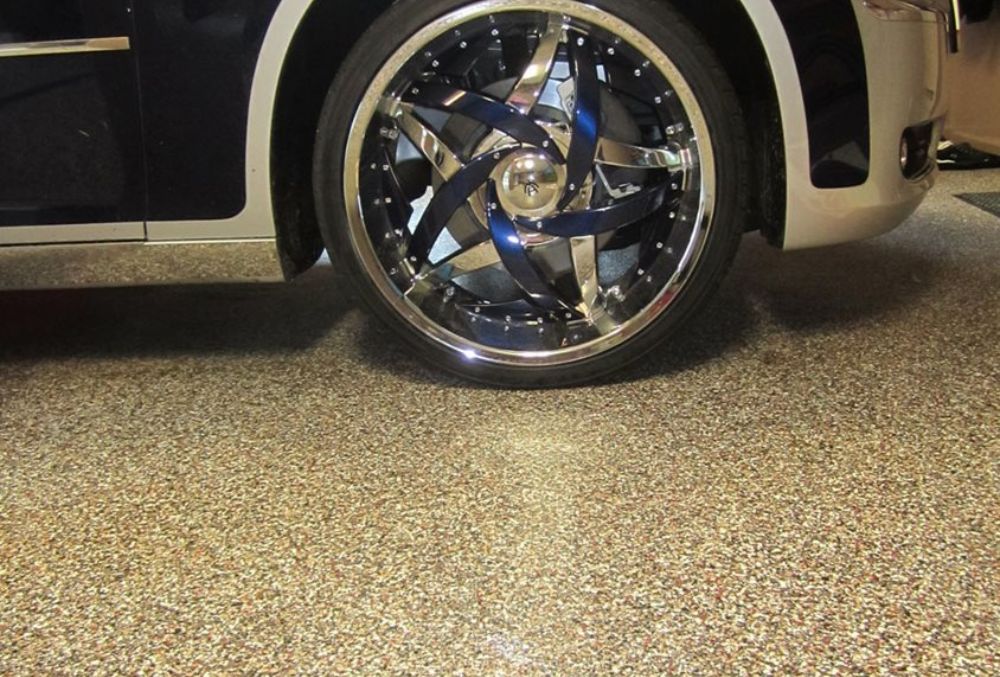
· Full broadcast flake. Flake covers the entire floor for a uniform, textured look. It hides minor imperfections in older slabs and gives the most traction on a damp floor.
· Medium broadcast flake. Flake is spread more lightly so the base color shows through. It gives a cleaner, more modern look with less texture.
Flake comes in a range of colors and blends, from light grays to darker, warmer tones that hide tire marks. Browse finished floors in our gallery, and we will bring samples to your walkthrough so you can see them in your own garage light.
How Garage Floor Coating Installation Works
Every garage floor coatings project we install in the New Orleans area follows the same process. Prep is where most of the work happens, and it is the part a low quote usually cuts.
1. On-site walkthrough. We inspect the slab, check for moisture, note cracks, stains and any old coating, and ask how you use the space.
2. Diamond grinding and cleaning. Grinding removes the weak top layer, old sealers and oil-soaked concrete so the coating bonds to sound concrete. Acid etching alone does not do this.
3. Crack and joint repair. Settlement cracks and control joints are repaired, often with Sundek’s flexible Mastic, so they do not show through or reopen.
4. Coating application. A base coat goes down, flake is broadcast if you chose it, and a protective topcoat seals the floor.
5. Final walkthrough. We walk the finished floor with you and go over care and when it is ready for your vehicle.
Most residential garages are finished in one to two days. You can typically walk on a polyaspartic floor within a few hours and park on it the next day. Plan to clear the garage before install day. Because the work is indoors and we check conditions that morning, garage coating can be scheduled year-round in New Orleans, including the humid summer months.
What Affects the Cost of Garage Floor Coating in New Orleans
Every garage is different, so the only accurate price comes from seeing the floor. These are the factors that shape a quote:
· Square footage. Larger floors spread setup and prep across more area.
· Slab condition. Settlement cracks, spalling, pitting and deep oil stains add repair and prep time.
· Existing coatings. A failed DIY epoxy or old paint has to be ground off before anything new goes down.
· Moisture conditions. A slab with high moisture may need extra preparation for the coating to bond and stay bonded.
· System and finish. Polyaspartic versus epoxy, flake style and topcoat all affect material and labor.
· Layout. Steps, drains, columns and transitions into the house take more detail work.
When you compare quotes, ask each contractor how they will prepare the slab, whether they will test for moisture, how cracks will be repaired and how many years the floor should last before it needs work. Two quotes that look far apart are often describing two very different floors. For more on how pricing works, see our garage floor coating cost guide, then ask us for a written quote based on your actual floor.
Garage Floor Coating Across the New Orleans Metro
We install garage flooring for New Orleans homeowners in Uptown, Lakeview, Gentilly, Algiers and across Orleans Parish. We also work throughout Jefferson Parish, including Metairie and Kenner, and across the lake in St. Tammany Parish. See our full service area for every community we cover across Louisiana, South Mississippi and South Alabama.
A garage project is often the start of a larger refresh. Many New Orleans homeowners pair floor coatings with concrete driveway resurfacing so the driveway and garage match, or with pool deck coating in New Orleans using Sundek’s Classic Texture. For shops, showrooms and service bays, our commercial floor coatings use the same fast-cure systems to limit downtime.
Why New Orleans Homeowners Choose Concrete Coatings Inc.
· 37 years on the Gulf Coast. Locally owned and operated, not a franchise.
· The only authorized Sundek installer in Louisiana, South Mississippi and South Alabama, installing genuine Sundek systems, including SunOne Polyaspartic.
· Prep done right. Diamond grinding, moisture checks and crack repair on every garage floor.
· Warranty coverage. 2 years on residential work and 1 year on commercial work.
· Fully insured through LWCC and Foster & Crum.
· Free on-site estimates with a written quote for your floor.
Frequently Asked Questions
What is the best garage floor coating for a New Orleans home?
For most New Orleans garages, a professionally installed polyaspartic system, such as SunOne Polyaspartic over a diamond-ground slab, is the best fit. It resists hot-tire pickup, stays UV-stable and returns to use quickly. A decorative flake finish adds traction for humid days when the slab sweats.
Will a garage floor coating stop my garage floor from sweating?
No coating stops condensation, because sweating comes from warm, humid air meeting a cooler slab. A coated floor does not absorb the moisture, though, so it wipes dry and does not stain, and a flake finish gives more grip while the surface is damp.
Can you coat a garage floor with settlement cracks?
Yes. Settlement cracks are common in New Orleans slabs because of the soft soil. Cracks and control joints are repaired before coating, often with a flexible sealant such as Sundek’s Mastic, so the finished floor stays smooth and the repairs are sealed under the coating.
Does a coated garage floor hold up if storm water gets into the garage?
A coated floor does not absorb water, mud or debris, so it cleans up and dries out much faster than bare concrete after heavy rain. A coating does not make a garage flood-proof, but it protects the slab surface and makes cleanup easier.
Do you install garage floor coatings in Metairie, Kenner and the Northshore?
Yes. Concrete Coatings Inc. installs garage floor coatings throughout Orleans, Jefferson and St. Tammany Parishes, including Metairie, Kenner, Slidell, Covington and Mandeville, as well as across the rest of Louisiana, South Mississippi and South Alabama.
Schedule Your Garage Floor Coating Estimate in New Orleans
Concrete Coatings Inc. has served the Gulf Coast for 37 years as the only authorized Sundek installer in Louisiana, South Mississippi and South Alabama. Every garage floor coating in New Orleans starts with an on-site walkthrough of your slab, its moisture conditions and how you use the space. Call (985) 542-2757 or schedule a free estimate.